


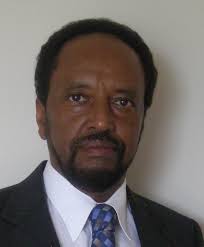

Asafa Jalata, PHD
Professor of Sociology, Global and Africana Studies the University of Tennessee at Knoxville
Abiy Ahmed’s grand narrative of Ethiopianism, which attempts to rebuild the so-called great ancient Ethiopia with the image of Menelik, glorifies his ghost and justifies colonialism, state- or state-sponsored terrorism, and recurrent wars on the Oromo people and the subjugated others. As far as the colonized nations are concerned, Menelik’s state-building strategies and policies symbolized darkness and horror because they involved violence, slavery, colonialism, racism, genocide, and gross human rights violations. In other words, Ethiopianism has justified the Habasha (Amhara-Tigrayan) colonial political project of domination and exploitation of the Oromo and others by any means necessary.
Currently, the Ethiopian state led by Abiy Ahmed is trying to destroy or suppress national Oromummaaa,[1] which means Oromo national identity, culture, and nationalism, and the Oromo national movement, which struggles for Oromia’s self-determination and egalitarian democracy of the gadaa/siiqqee system (indigenous Oromo democracy).[2] The piece explains why the Abiy Ahmed government and its supporters are determined to restore Menelik’s legacy and maintain the supremacy of Habasha culture, language, history, and Orthodox Christianity in a multicultural and multireligious empire.
Imperialism and Colonialism and their Consequences
The partitioning of the Horn of Africa was part of the Scramble for Africa, after which European colonial powers divided Africa among themselves. France, Britain, Italy, and Abyssinia/Ethiopia divided the Horn region during the second half of the nineteenth century. The alliance between the European imperialists and the Ethiopian colonialists enabled the Abyssinian warlords to build their Empire by colonizing their main enemy, the Oromo, and other nations. The French, Italians, and British continuously supplied Menelik with various weaponry, ammunition, and technological expertise,[3]all of which Menelik parlayed into the foundation of the central state. The firearms from European powers made the Ethiopians “by far the strongest native power in Africa” and the “best armed native race in Africa.”[4] With Oromo resources, Menelik “rewarded his generals, paid his soldiers, and bought, first from the French and then from the Italians, huge supplies of arms and ammunition wherewith to equip his ever-growing armies.”[5]
“To obtain the necessary finances,” Marcus says, “Menelik and his advisors decided to organize a caravan to carry various . . . products to the coast for transshipment to Europe.”[6] Czeslaw Jesman notes that Menelik “personally controlled most of the trade of his state. . . . he was a merchant King, besides being a millionaire.”[7] In a letter to European powers, Menelik expressed his intention to participate in the scramble for Africa: “I have no intention of being an indifferent spectator if far distant Powers make their appearance with the idea of dividing Africa.”[8] Explaining how Menelik began to establish his administration in Oromia, John Murray writes, “Convinced that much more was to be made out of the helpless [Oromo] by their permanent exploitation, he began in the early [18th] seventies to occupy the districts that he overran with permanent garrisons of his troops, providing at the same time for their administration under a hierarchy of his officials.”[9] Menelik sent a large expedition to the Oromo country (Oromia) to correctly solve Abyssinia’s economic and famine problems. Marcus argues that “Expeditions were often organized during times of famine when numerous refugees went along to settle in newly conquered lands with the soldiers who stayed behind to garrison the fortified villages (katamas) erected as control points.”[10]
Menelik and his soldiers terrorized and colonized the Oromo and other peoples to obtain enslaved people and commodities such as gold, ivory, coffee, musk, hides and skins, and lands. Menelik controlled the slave trade (an estimated 25,000 enslaved people per year in the 1880s), owned with his wife 70,000 enslaved Africans, and became one of the wealthiest capitalists in the region and the world: “The Abyssinian ruler had extended the range of his financial operations to the United States and [was] a heavy investor in American railroads … with his American securities and his French and Belgian mining investments, Menelik [had] a private fortune estimated at no less than twenty-five million dollars.”[11] The colonialists used guns (nafxi) and established a system of dispossessing mainly Oromo lands and exacting their labor and agricultural products. The colonial settlers—soldiers, clergypersons, and administrators, all known as nafxanyas—exploited gabbars (semi-slaves) who were coerced to provide them food, labor, tribute, and tax revenues both in cash and kind.[12]
The Ethiopian colonial expansion resulted in mass killings, destruction, and expropriation of property, plundering, enslavement, and genocide.
Some of the Oromo groups openly resisted and fought against the colonialists. For instance, between 1882 and 1886, the bloodiest colonial wars were conducted against the Arsi Oromo because they resisted Ethiopian colonialism under their gadaa government. Menelik colonized them in 1886 after conducting six savage campaigns. In addition to mass killings, the hands of thousands of Arsi Oromo men were cut off, and the breasts of thousands of women were mutilated by the order of Menelik at Annole in 1886. About the colonized regions, Harold Marcus says, “Not only were these territories effectively occupied and policed, but they were also being economically and politically integrated into . . . Ethiopia.”[13]Ethiopian settler colonialism developed five types of social arrangement: the katanas (garrison of towns), slavery, the balabat system (the collaborator class), the nafxanya-gabbar system, and the colonial landholding system. The colonial settlers hierarchically organized the katamas in Oromia as their main geopolitical centers for practicing political domination through various control agencies, wealth and capital accumulation, and religious and cultural dissemination.[14] The katamas served as nerve centers of the Ethiopian colonial system through which colonial political, economic, and ideological programs were formulated and implemented; they were hierarchically organized as the principal, provincial, and subdistrict towns so that chains of command would flow from the center to the local level without any interruption. These garrison towns were established strategically and politically secured places and became centers of regional rule and trade networks connecting parts of Oromia to Ethiopia and Europe. As such, they constituted nodal points of a more extensive countrywide network of towns that, woven territorially, organized the relational structure of Ethiopia’s political economy, including the colonialist rule and the flow of products.
The garrison cities were geopolitical headquarters from which Ethiopian soldiers were dispatched to impose colonial rule through enslavement, subjugation, and expropriation of the essential means of production, such as cattle, land, and other valuables. Through these centers, expropriated goods flow to local consumption and international markets. The Oromo branches who resisted colonialism were massacred or fled or became enslaved people, servants to, or manual workers of the colonialists. Still, a few who accepted Ethiopian dominance were culturally assimilated and incorporated into the Ethiopian colonial system. Centralizing their political power in Finfinnee (Addis Ababa) with the help of their modern army and communication networks, the colonialists continuously expanded their territories until they reached areas effectively occupied by Britain, France, and Italy. The Ethiopians raided the crops and the cattle of the Oromo and other peoples to feed the famine-stricken Ethiopians. By colonizing the Oromo country, the Ethiopian ruling class transplanted their fellow Ethiopians, mainly Amharas, to Oromia and forced the Oromo to work for them. The Ethiopian “migrant soldier-peasant had formed the flesh and sinew of … armies of expansion in the south and west, but revenues from northern [Ethiopian] peasant farms never were a significant source of revenue for Ethiopia’s growth into a modern state.”[15]
Abyssinian soldiers and other famine-stricken Ethiopians continuously occupied the Oromo lands, devastated their properties and lives, looted their grain and cattle, and enslaved those whom they captured in fighting or those who could not pay taxes. The institution that entitled the colonialists and their intermediaries to exact labor and agricultural products from the Oromo and others was the nafxanya-gabbar system. The Ethiopian settlers—soldiers, clergypersons, and administrators (all known as nafxanyas)— exploited gabbars[16] who were coerced to provide them food, labor, tribute, and tax revenues both in cash and in kind.[17] Stahl states, “The lords demanded one-third to one-half of the harvest. In addition, they had to provide chicken, eggs, sheep, and beer for lords’ banquets on important holidays.”[18] The Oromo farmers and herders were also forced to work on estate farms, building roads, and other construction projects. The control of gabbar labor and the expropriation of lands were inseparable phenomena. Initially, land without labor had no value, so the colonialists needed gabbars who would work for them. The state expropriated the best lands and appointed stewards (called misilenes) to manage hudads (estate farms) and gabbar labor.
In addition to paying tributes, taxes, and tithes, the gabbars produced food and raised cattle, horses, and other animals for the emperor and his officials. The emperor and royal households owned extensive tracts of the best lands that supplied necessary provisions. Local and regional state officials had estate farms that were worked by the gabbars. These farms produced all the required products for consumption and market. The rural household economy remained the basic production unit despite such farms and a few concession farms. In Oromia, the primary sources of revenue gradually became gabbar labor and land for the colonial state and its officials. The survival and evolution of the Ethiopian client state depended mainly on the dual bases of landownership and articulation with European imperialism. Initially, this colonial state financed itself with revenues obtained from looting, enslavement of the colonized peoples, and control of trade. However, gabbar labor and land gradually became the primary state revenue sources. “The system of land ownership was crucial to the country’s economic and social life,” writes Richard Pankhurst, “for besides determining questions of social class, it was the basis of administration, taxation, and military service.”[19]
Oromo lands were turned over to the state’s governors, military commanders, soldiers, and settlers to safeguard Ethiopian control and produce extraction. The Ethiopian colonialists settled fellow villagers in Oromia to perpetuate their dominance. The colonial state claimed absolute rights over three-fourths of the Oromo lands and provided portions for its officials instead of salary. The Ethiopian nobility and ecclesiastical, civil, and military officers were rewarded with grants of lands called maderia and rist-gult. The nafxanyas and foreign mercenaries who participated in the colonization of Oromia as soldiers, settlers, messengers, priests, spies, and correctional officers were also granted land as a reward for their service. The amount of land (whether granted temporarily or permanently) depended on rank or position. An ordinary soldier received from one to three gashas (a gasha is approximately forty hectares), a captain of fifty soldiers was granted up to five gashas, and a leader of three hundred soldiers received up to twenty gashas of land. The state also commodified and sold some lands to individuals. The Oromo farmers and pastoralists faced a similar fate everywhere. One-fourth of the land was granted to the Oromo collaborators, and one person from each subgroup took charge. Such persons collected taxes and then paid them to the colonial settlers and the state. Gradually, they developed into landlords and collaborated with the colonialists for the oppression and exploitation of the Oromo.
Successive Habasha regimes have engaged in terrorism and genocide[20] and exploited the resources of the Oromo, Afar, Anuak, Nuer, Shinasha, Berta, Gumuz, Sidama, Walayita, and others, and racialized and suppressed their national movements to maintain a racial/ethnonational hierarchy and continue exploitation and subjugation. While engaging in state terrorism in the form of war, torture, rape, and genocide to control the Oromo and others and loot their economic resources, the Ethiopian state elites, and their collaborators have recently claimed that they have been promoting democracy, multinational federalism, and national self-determination. Of course, Amhara elites are even against these cosmetic changes and accuse these subjugated groups, particularly Oromo activists, as “narrow nationalists,” or “racists,” or “terrorists.”[21] The Ethiopian state elites have used various techniques of violence to terrorize the Oromo, who have been engaged in the struggle for liberation and democracy. The Ethiopian soldiers and security networks have committed the following crimes against Oromo activists. They have been whipped or tortured; locked in steel barrels, or forced into pits where the fire was made on top of them; fixed large containers or bottles filled with water to men’s testicles; or, if their victims were women, bottles or poles were pushed into their vaginas.[22]
In addition, the soldiers have openly shot thousands of peaceful people in Oromia, leaving their bodies for hyenas, burying them in mass graves, or throwing their corpses off cliffs. Other methods of killing included burning, bombing, cutting throats or arteries in the neck, strangulation, and burying people up to their necks in the ground. For example, as Mohammed Hassen estimates, between 1992 and 2001, about 50,000 killings and 16,000 disappearances (euphemism for secret killings) occurred in Oromia alone.[23] Furthermore, he estimates that 90% of the killings were not reported. To hide these state crimes from the world community, the government did not “keep written records of its extra-judicial executions and the prolonged detention of political prisoners.”[24] The regime killed or imprisoned thousands of Oromo students because they engaged in peaceful demonstrations. Saman Zia-Zarifi, the academic freedom director at Human Rights Watch, notes, “Shooting at unarmed students is a shameful misuse of government power” in Ethiopia.[25]
The political agenda of the destruction of Oromo society is not a new phenomenon. The West has been supporting this political agenda. With the emergence of 9/11 terrorism in the U.S., the U.S. government and other Western governments have used the discourse of Islamic fundamentalism to support the Ethiopian regime and to suppress the struggles of the Oromo and others for self-determination, social justice, and democracy. This implies that since some Oromo are Muslims, they are “Islamic fundamentalists” and are not entitled to democracy and national self-determination. In the past, the colonization of the Oromo and others was rationalized and justified by various ideological discourses. It was explained that since these peoples were “pagans” and “uncivilized” and that Habashas were Christians and “civilized,” the Habashas were entitled to colonize these peoples and impose their civilization and Christianity on them. State terrorism, hidden genocide, and massive human rights violations are used to keep the Oromo and other peoples subordinated and exploited.
Today, the Ethiopian colonial settlers have dominated cities and towns in Oromia. They have segregated the Oromo people both in urban and rural areas and have kept them under “Ethiopian political slavery” by using the army, modern weapons, the media, the telephone, the fax, the Internet, and other communication and information apparatuses and networks, as well as global connections. Using political violence, the Ethiopian government has denied the Oromo and others the freedom of expression and organization, as well as access to the media and all forms of communication and information networks. Consequently, the Oromo are denied the privilege of self-definition and self-development and are forced to provide their economic and labor resources to the Ethiopian colonizers and their supporters while living under deplorable conditions in the twenty-first century.
The Neo-nafxanya Government and Why Menelik’s Ghost Devastates the Oromo People
After becoming prime minister in 2018, Abiy Ahmed positioned himself as a man of peace and democracy who would transition Ethiopia from its troubled past to democracy. This initially won him many supporters, both domestically and internationally. He was also applauded for signing a peace deal with Eritrean President Isaias Afwerki, granting amnesty to political prisoners, and reducing press censorship. As a result, he was awarded the Nobel Peace Prize in 2019. But, within a short time, Abiy reversed most of the reforms he had introduced. He started to show his second and real face, one of cruelty, manifested in state terrorism and massive human rights violations. While much attention was given to his administration and allies’ atrocities in Tigray, state terrorism in Oromia has become rampant.
Within months in 2018, Prime Minister Abiy Ahmed organized a clandestine committee called Koree Nageenyaa (Security Death Committee).[26] The prime minister created the committee and assigned Shimelis Abdisa, Abiy’s former chief of staff and the president of Oromia, to lead it; members of the committee included Fekadu Tessema, Oromia’s Prosperity Party leader, Ararsa Merdasa, head of security for Oromia, Awalu Abdu, vice president of Oromia, and many political and security officials. The security committee “has ordered extra-judicial killings and illegal detentions to crush” the leadership of the Oromo national movement led by the OLF and the OLA, which have struggled for Oromia’s self-determination and democracy for almost a half-century.[27] Fearing the revolutionary potential of the Oromo youth, the clandestine security committee cracked down on new protests in 2019, displacing hundreds of thousands in Oromia. It also killed or arrested hundreds of people and tortured them.
The security committee “not only eliminates suspected enemies. It also acts preemptively to keep protesters off the streets. In 2019, the committee ordered that people deemed a security threat be arrested or their prison terms prolonged.”[28] The Abiy government has violated its laws, arrested people without a warrant, and blamed its violent crimes on the OLA.[29]Abiy’s brutal repression in Oromia and against Oromos is not new. Oromo nationalists have believed that Abiy, like many of his predecessors, is running a neo-nafxanya administration that exalts the glories of Ethiopia’s imperial history and seeks to continue its oppressive, brutal, and exploitative practices. Defining what a neo- nafxanya administration requires understanding the historical nafxanya-gabbar system. As discussed above, Menelik and his collaborators created the nafxanya-gabbar system as a form of settler colonialism during the last decades of the 19th century by settling Amharas, Tigrayans, and other groups—mainly highlander Orthodox Christians—in Oromia and beyond.
The colonizing army looted cattle and grain and committed horrifying acts of mutilation, such as cutting the breasts of women and the male organs and the hands of men.[30] The Menelik’s army then established a system of control over the rest of the population by dispossessing them of their land, exploiting their labor, and taking their agricultural products. Emperor Haile Selassie’s government expanded and consolidated the nafxanya-gabbar system before changes occurred in the Ethiopian empire-state in 1974. Although the failed 1974 revolution nationalized land and changed the status of the gabbar in the central and southern regions, the fundamental nature of the state was not changed. The new militarized socialist state intensified the brutalization of marginalized groups, including Oromos. The same is true about the change of government in 1991. Despite the Tigay-dominated government adopting some aspects of multinational federalism, it primarily existed only on paper. This government was never committed to the self-determination rights it gave lip service to.
The Tigrayan elites and their collaborators from other ethnonational groups were dominant and, in line with their neo-nafxanya predecessors, exploited marginalized groups. Therefore, the Abiy government is considered as “neo-nafxnaya” because it tries to modernize the Ethiopian state by glorifying imperial leaders and the history of the Empire while denigrating the history of marginalized communities, particularly that of the Oromo. Habesha elites under successive regimes have denied the colonization of the Oromo and presented them as “invaders” of Ethiopia, referring to the so-called Oromo migrations of the 16th and 17th centuries. The neo-nafxanya system defenders use portrayals of Oromos as expansionist invaders to justify the brutal colonialism of the Ethiopian state. In his various historically void speeches, Abiy lectures the long-marginalized peoples of Ethiopia to forget how the Ethiopian empire-state brutalized the Oromo, Sidama, Somali, Qimant, Agew, Wolayta, Gambella, Berta, Gumuz, and others.[31]
When Abiy articulates the greatness of Ethiopia and its leaders, what comes to mind for many members of these groups is brutality, state terrorism, and human rights violations. Despite Abiy and the Ethiopianist camp that supports him trying to discredit the historical narrative of these victimized groups and legitimize the crimes of successive Ethiopian governments, the people will never forget their actual history. Abiy’s neo-nafxanya administration has also started ideological warfare on Oromummaa (Oromo nationalism) by glorifying Amhara nationalism disguised as Ethiopianism. As the Abiy administration tried to revive the assimilationist nation-building project, one aspect of the strategy involved the systematic attack on Oromo’s political and cultural institutions. Despite his administration giving lip service to the importance of Gadaa/Siiqqee leaders, it is oppressing Gadaa leaders who are the custodians of Oromo culture, institutions, and democracy. For instance, on 1 December 2021, federal and Oromia government forces attacked a Gadaa religious ceremony in Karrayu, East Shewa Zone.[32] They beat and abducted the Abbaa Gadaa—the traditional head of spiritual, social, legal, and economic affairs—other community leaders and innocent young men. The bodies of fourteen people, including the Abbaa Gadaa, were found the next day, while 25 others were unaccounted for and are believed to be dead.
Abiy’s government has been centralizing power in a way reminiscent of Ethiopia’s imperial past. Abiy used his Oromo cultural affinity, the Qeerro/Qaarree (Oromo youth) movement, and the Oromo Democratic Party (ODP, formerly the OPDO) to manipulate the Tigrayan-led government and become prime minister. Once he took power, he used the narrative of democracy, reconciliation, and transition to convince the wider public.[33] These conditions gave him time to establish his total control of state structures and consolidate power by surrounding himself with loyalists and creating an alliance against the Oromo Liberation Front (OLF), Oromo Liberation Army (OLA), Oromo Federalist Congress (OFC), and Tigray’s regional government—all perceived to be threats to his centralization plans. Like its predecessors, this administration has effective control over the country’s political economy and uses the military, police, and other security forces to suppress dissent. Ethiopian prisons are now mainly filled with Afaan Oromoo and Tigrigna speakers, and the offices of many private media, such as the Oromia Media Network (OMN), are closed in Ethiopia.[34] Abiy’s government has continued the policy of land dispossession from farmers and pastoralists in Oromia and the other colonized regions.[35]
Any Oromo who does not conform to the neo-nafxanya revisionist history, cultural destruction, economic exploitation, and land dispossession is liable to be subject to state violence. That violence has been used to impose fear on the public as a ploy to change their political behavior of resistance and make them support the current administration. The Ethiopian government has never refrained from attacking the OLF and OLA, along with the Oromo public, to destroy the Oromo struggle for self-determination. Starting in 2018, when Abiy came to power, members of OLA and the Qeerroo/Qarree movement have been hunted and killed or detained in many places across Oromia.[36] Soon after he came to power, Abiy established military command posts in some parts of Oromia, such as Wello, Wallaga, Guji, and central Oromia, giving them a free hand to kill Oromo youth and other civilians who were suspected to be Oromo nationalists and sympathizers of the OLF and the OLA.
To destroy the OLA, the Abiy government has intensified state terrorism and genocidal massacres in Wallagga, Tulama, Guji, Wallo, and other areas.[37] Government forces and security agents have focused on identifying and executing people related to OLA and Qeerroo/Qarree in politics and blood, claiming they support or sympathize with them.[38] The Abiy government and its political party, the Prosperity Party, do not hide their plans and actions of “ethnic cleansing” in Oromia. Fekadu Tessema, Prosperity Party head, Oromia branch, was heard at the Oromia Regional Parliament meeting, Adama, on February 27, 2021, saying, “If you want to get rid of the fish completely, you need to dry up the ocean.”[39] He meant that to eliminate the OLA, the government needs to destroy the Oromo people who are supporting the organization. Having declared war on Oromia and the OLA, the administration massacred or imprisoned mainly Oromo students and farmers in Wello, Wallaga, Guji, central Oromia, and other areas.[40] The Prosperity Party system also has given at least tacit support for Amhara Fano militias attacking Oromo civilians.
Regional forces from Amhara, Somali, and other regions, and Eritrean troops, have engaged in brutality against the Oromo people.[41] Amnesty International notes, “Ethiopian security forces committed horrendous human rights violations, including burning homes to the ground, executions, rape, arbitrary arrests, and detentions… in response to attacks by armed groups and inter-communal violence in Amhara and Oromia.”[42] Public executions have also taken place. These actions are intended to terrorize Oromos so that they abandon their struggle for self-determination. However, the opposite is happening across Oromia as Oromo nationalism has further developed. More and more young people have joined the OLA, and many support the fight for survival and freedom, including many youths who were part of the Qeerroo/Qarree movement. Abiy has ordered the defense forces, security, police, and government officials to openly fire suspected Oromo nationalists and relatives or friends of OLF members at public or secret places and display their corpses to the public.[43] Recently, the fano militia has cut the throats of young Oromos in Wallaga and Salale in northern Shawa and bragged and danced, butchering evil Oromos.[44] The government and Amhara media, religious and civil institutions, and political parties have said nothing about this barbarism and heinous crimes against humanity.
Discussion and Conclusion
The Abiy government has continued the Habasha settler state, which Menelik started by maintaining its main features. Successive Ethiopian governments have built and maintained this settler state without changing its essence through fostering the supremacy of the Amhara language, Amhara-Tigray culture, Orthodox Christianity, and the colonial ideology of Ethiopianism by using the colonized population groups, such as the Oromo, as raw material and firewood. Abiy Ahmed boasts on TVs and social media that he is ready to kill anybody who tries to restructure and change the current Ethiopian state. He calls the Tigrayan and Oromo movements “the cancer of Ethiopia,” which must be militarily destroyed.[45] Abiy is continuing the colonial nation-building project initiated by Menelik and continued by Haile Selassie and others.
The 2018 regime change was more disastrous than the previous two regime changes of 1974 and 1991 for the Oromo because Abiy Ahmed opened a new war on them as soon as he captured state power. When the Qeerroo/Qarree protest movement destabilized the Tigraya-led government, the leaders of its puppet organizations appointed Abiy Ahmed, a member of the Oromo People’s Democratic Organization, as the prime minister to replace Haile Mariam Desalegn to introduce a cosmetic change and keep the system the way it was. Even though Abiy Ahmed became Ethiopia’s prime minister mainly because of his Oromo background and the Oromo youth movement that dislodged the Tigrayan-led government and the assumption that he was an Oromo, he first targeted the movement for destruction.[46] Abiy has attacked the Oromo national movement to suppress Oromo nationalism and obliterate Oromo’s history, culture, and identity.[47] Considering the Oromo Liberation Army (OLA) as an integral part of the Oromo youth movement and the Oromo national struggle, Abiy Ahmed’s government has labeled the OLA “Terrorist Shanee” to dehumanize and destroy Oromo nationalists and others who manifest Oromo cultural markers, such as clothing, hairstyles, Oromo belief systems, Gadaa values, and identity.
By using the name Shanee, the Abiy government and all its nafxanya supporters have attacked all Oromo independent political, religious, and civic organizations to make the Oromo a people without leadership and institutions. Naming Oromo nationalists Shanee to target and destroy the Oromo organizations and leadership to disorganize and massacre them demonstrates the intentions and actions of the Abiy government and the Amhara elites and organizations that have allied with this government until recently. There are nafxanayas, or Ethiopianized Oromos, who have become a base for the Abiy government to accumulate wealth and enjoy luxurious lifestyles at the cost of the ordinary people. The Abiy government invited OLF leaders to return to Oromia from exile and jungle, claiming they could peacefully continue their national struggle for democracy and self-determination. But, within a short time, it betrayed them. The neo-nafxanayagovernment almost outlawed the OLF, the liberation front leading the Oromo national movement since the early 1970s.
The Abiy government had prevented the OLF and the Oromo Federalist Congress (OFC) from participating in the elections in Oromia and Ethiopia. Abiy’s Prosperity Party claimed to win most parliamentary seats in its fake polls. As a result, the neo-nafxanya government has stopped the peaceful struggle, and the only option remaining is the OLA’s approach, which is the protracted armed struggle. The Ethiopian political system has no space for Oromo nationalists who struggle to dismantle Ethiopian settler colonialism and its decadent institutions and ideology. The government has implemented brutal policies to maintain absolute power.[48] It arrested thousands of people for several months without charging them by violating national and international human rights laws under conditions that amounted to torture; it provided ‘training’ for detainees for a few months on the constitution, the rule of law, and the so-called history of the Oromo people’s struggle.[49] Government soldiers and security forces have committed many crimes, including extrajudicial killings, burning houses, raping, forced evictions, brutal beatings, and burning people alive or corpses.
The Oromo national movement has engaged in a liberation struggle to recreate an Oromia sovereign democratic state and Oromo freedom by demolishing the combined forces of the colonialists and the Ethiopianized Oromo collaborative class. The brutality and criminality of the Ethiopian colonial state, the deplorable living conditions of Oromo society, international law, and the violations of the U.N. Universal Declaration of Human Rights and the United Nations Declaration on the Rights of Indigenous Peoples justify the rebirth of the sovereign and democratic Oromia state. Even though the Oromo have abundant economic resources, they live under the darkness of ignorance, abject poverty, and political slavery and are exposed to state terrorism and massive human rights violations. They are denied the freedom of expression, the media, organization, and the freedom of self-development. They are forced to provide their economic and labor resources to the Ethiopian colonizers and their supporters while living under deplorable conditions in the twenty-first century.
Oromo nationalists are convinced that the only way for the Oromo to get out of these deplorable political, economic, cultural, and social conditions is by intensifying the political and armed struggle led by the OLF and OLA. In the capitalist world system, might is right. The neo-nafxanaya government, the imperial interstate system, the African Union, the U.N., and Western and other states cannot stop the Oromo if they rise in unison to eliminate all political forces that deny them their universal human rights and capabilities. Most colonized nations worldwide have achieved their freedom and sovereignty by engaging in protracted political and armed struggles, which are self-defense rights. The OLF and OLA need to build national organizational capacity by integrating political and military activities and preparing a ground for the rebirth of the sovereign and democratic Oromia state.
Furthermore, all Oromos should pay the necessary prices of knowledge, logistics, human power, and money to support the OLF and the OLA. The Oromo youth should also join the OLF and OLA rather than become the colonial government’s mercenary and kill their citizens or die while running away from Oromia to foreign countries or being massacred by the Abiy government. The Oromo deserve popular sovereignty, statehood, egalitarian democracy, and membership in the U.N. to restore their human freedoms and build their capabilities to achieve security, peace, and sustainable development. The human rights of the Oromo people will be protected if they defend themselves by any means necessary from their executioners by organizing and struggling to form their sovereign government and other essential institutions.
Notes
[1] For further discussion, see Asafa Jalata, Orommummaa: Oromo Culture, Identity and Nationalism, Oromia Publishing Company, Atlanta: Georgia, 2007.
[2] Asafa Jalata and Harwood D. Schaffer, “The Oromo Movement for Gadaa/Siiqqee Renaissance in the 21st Century,” The Journal of Oromo Studies, pp. 1-27.
[3] Harold G. Marcus, Ethiopia, Great Britain, and the United States, 1941-1974 (Los
Angeles: Univ. of California Press, 1983), p. 13.
[4] Richard Pankhurst, “Menelik and Utilisation of Foreign Skills in Ethiopia,” The Journal of Ethiopian Studies, vol. v, no. 1(1967), pp. 65-66.
[5] The Early Lytton, The Stolen Desert (London: 1967), p. 160.
[6] HaroldG.Marcus,TheLifeandTimesofMenelikII,Ethiopia1844-1913(Oxford:
Clarendon Press, 1975), pp. 44.
[7] Czeslaw Jesman, The Russians in Ethiopia (London: Chatto and Windus, 1958), p. 60.
[8] Quoted in [8] Robert P. Skinner, Abyssinia of Today (New York: Negro Univ. Press, 1969), p. 145.
[9] JohnMurray,“AbyssiniaUnderMenelikandAfter,”p.35.
[10] HaroldG.Marcus,TheLifeandTimesofMenelikII,pp.64-5.
[11] https://www.nytimes.com/1909/11/07/archives/king-menelik-has-investments-here-abyssinias-ruler-said-to-be-a.html, accessed on 01/05/2025.”King Menelik has Investment Here,”
[12] A ras (a head of a group) or dajazmach (war leader) could receive 1,000 gabbars, a sub-governor 200 or 300, a fitawrar (another war leader) 300, a kangazmach (lower war leader) 150, and ordinary soldiers, depending on their ranks, 20, 15 or 10. The Amhara-led colonial government claimed absolute rights over three-fourths of the Oromo lands and provided portions for its officials and soldiers in lieu of salary. One fourth of the land was granted to the Oromo collaborators, who became the agents of the nafaxanya state. Even though some changes occurred in the Ethiopian Empire during 1974, 1991, 2018, the nafxanya of all kinds have come to power and continued to protect the same system. The current regime led by Prime Minister Abiy Ahmed is characterized as the neo-nafaxanya government because it tries to modernize the Ethiopian state by glorifying Menelik.
[13] Harold G. Marcus, “The Black Men Who Turned White: European Attitudes
Towards Ethiopia,” Archiv Orientalni 39 (1971), Academia, nakladatelstvi,
Ceskoslovenka Akademie ved, p. 165.
[14] See Asafa Jalata, Oromia &Ethiopia, pp. 88-93.
[15] James McCann, From Poverty to Famine in Northeast Ethiopia: A Rural History 1900-
1935 (Philadelphia: Univ. of Pennsylvania Press, 1987), pp. 57-58.
[16] Gabbars were treated as serfs and, in some instances, as enslaved people. They provided labor, tribute, and tax revenue to their new lords.
[17] McClellan, Reaction to Ethiopian Expansionism: The Case of Darasa, 1895-1935, (Ph.D.
dissertation: Michigan State univ., 1978), p. 121.
[18] Michael Stahl, Ethiopia: Political Contradictions in Agricultural Development (Stockholm:
Raben & Sjogern, 1974), p. 46.
[19] RichardPankhurst,EconomicHistoryofEthiopia,1800-1935(AddisAbaba:Haile
Selassie I Univ., 1968), p. 135.
[20] “Two Liberation Movements Compared: Oromia & Southern Sudan,” Social Justice: A Journal of Crime, Conflict & World Order, Vol. 27, No. 1: 152-174.
[21]https://yooyyaa.com/2019/11/26/10-glaring-irrationality-of-nafxanyaas/,accessed on 2/16/2021; https://zehabesha.com/delusion-of-oro- mo-and-pseudohistorical-of-emperor-menelik/, 2/16/2021.
[22] Fossati, B., Namara, L., and Niggli, P. 1996. The new rulers of Ethio- pia and the persecution of the Oromo: Reports from the Oromo refugees in Djibouti. Frankfurt, Germany: Dokumentation, Evangelischer
Pressedienst Frankfurt am Main.
[23]Mohammed Hassen, “Is Genocide against the Oromo in Ethiopia Possible,” Paper Presented at the Fourth International Biennial Conference of the Association of Genocide Scholars, Radisson Hotel, Minneapolis, Minnesota, June 10, 2001.
[24] Quoted in Mohamed Hassen, ibid., p. 33.
[25] Zia-Zarifi, S. (2004) ‘Ethiopia: Halt Crackdown on Oromo Students’, Human Rights Watch [http://www.hrw.org/press/2002/05/ethiopia052202.html].
[26] https://www.reuters.com/investigates/special-report/ethiopia-violence-committee/, “A REUTERS INVESTIGATION: In Ethiopia, a secret committee orders killings and arrests to crush rebels,” accessed on 02/27/2024.
[27] Ibid.
[28] Ibid.
[29] Ibid.
[30] https://brill.com/display/title/24518?crawler=true&lang=en&language=en&mimetype=application%2Fpdf
[31] https://www.ethiopia-insight.com/2020/10/08/why-did-ethiopias-prime-minister-blame-african-americans-for-their-victimization/
[32] https://addisstandard.com/news-abba-gadaa-union-says-missing-member-of-karrayyu-gadaa-leadership-dead-dozens-under-custody/#google_vignette
[33] https://foreignpolicy.com/2022/01/25/abiy-ahmed-ethiopia-qeerroo-oromia-betrayed/
[34] https://www.transparency.org/en/news/cpi-2021-sub-saharan-africa-amid-democratic-turbulence-deep-seated-corruption
[35] https://www.bpb.de/themen/migration-integration/regionalprofile/english-version-country-profiles/318392/the-ethiopian-path-to-development-land-grabbing-displacement-and-internal-migration/
[36] https://oromoliberationfront.org/english/the-prosperity-party-regime-of-ethiopia-must-stop-inhuman-and-cruel-massacres-and-detentions-of-family-members-of-oromo-opposition-parties-particularly-the-olf/
[37] Oromia Support Group (2021) Report 56. https://oromiasupport.org/wp-content/uploads/simple-file-list/Report-56-June-2021.pdf Oromia Support Group (2021). Empire Strikes Back: Catastrophic Consequences. Report 54. https://oromiasupport.org/wp-content/uploads/simple-file-list/Report54-January-2021. pdf
[38] Oromia Support Group (2021). Sacrilege in East Showa: Ethnic Cleansing by Amhara Supremacists as Ethiopia Collapses into Chaos. Report 58. https://oromiasupport.org/wp-content/uploads/simple-file-list/Report-58.pdf
[39] Oromia Support Group (2021). If You Want to Get Rid of the Fish Completely, You Need to Dry up the Ocean. Report 57. https://oromiasupport.org/wp-content/uploads/simple-file-list/Report-57.pdf
[40] https://www.youtube.com/watch?v=vp0y5ezZjo0
[41] https://eritreahub.org/report-eritrean-troops-despatched-to-oromia
[42] https://www.amnesty.org.uk/press-releases/ethiopia-security%20forces-must-face-justice-horrific-human-rights-violations-new
[43] See all volumes of Oromia Support Group, https://oromiasupport.org/, accessed on 01/06/2025.
[44] Ibid.
[45] https://www.scirp.org/journal/paperinformation?paperid=123146#ref01
[46] M. M. Gemechu, (2022). How Abiy Ahmed Betrayed Oromia and Endangered Ethiopia. https://foreignpolicy.com/2022/01/25/abiy-ahmed-ethiopia-qeerroo-oromia-betrayed
[47] Ibid.
[48] Oromia Support Group (2021). Empire Strikes Back: Catastrophic Consequences. Report 54. https://oromiasupport.org/wp-content/uploads/simple-file-list/Report54-January-2021. pdf
[49] Ibid.


